




Graduate Program Requirements
Ph.D. in Archaeology and the Ancient World
The requirements for a Ph.D. in Archaeology and the Ancient World combine rigor (to ensure adequate training in the multiple fields the subject requires) and flexibility (to allow students space to evolve and pursue their own research interests). Requirements involve coursework and examinations in archaeology, ancient history and the relevant ancient and modern languages, and, of course, the writing of a dissertation.
All students in the program have the same base requirements, but it is understood that the selection of certain courses and the setting of certain examinations (for example, in ancient history or ancient languages) will follow the primary research orientation of the student, be it an interest in the Mediterranean, Egypt, or ancient Western Asia.
For general guidelines to Brown Ph.D. programs, visit http://gradschool.brown.edu/go/phdprograms.
For details of the Graduate School’s application process, visit http://gradschool.brown.edu/go/generalinfo.
Coursework Requirements
Course requirements are normally completed in the first three years of the program. Graduates are expected to take a regular course-load of four courses per semester (three courses in terms when a student is teaching or holding a proctorship). A minimum of 24 tuition units is required by the Graduate School.
Students are required to take:
— at least two courses in Mediterranean archaeology (prehistoric, Greek, Roman, medieval)
— at least two courses in Near Eastern or Egyptian archaeology
— at least two courses that explore theoretical, methodological or comparative issues in archaeology
— at least two courses in ancient history or ancient culture (the geographical focus of these courses may depend on the student’s primary research interest)
All these courses should normally be taken at the graduate seminar (200 and above) level, though other courses available for graduate credit may be taken with the permission of the Director of Graduate Studies (DGS). Click here for a list of courses associated with the Joukowsky Institute; other relevant courses are taught through the Departments of Anthropology, Classics, Egyptology and Ancient Western Asian Studies, History of Art and Architecture, and Religious Studies, among others.
Not required, but strongly encouraged, is the acquisition (through formal coursework or other means) of additional archaeological skill sets, such as expertise in Geographical Information Systems, faunal, botanical or osteological analyses, geomorphology, ceramic analysis, materials science, and so on.
Ancient History
The archaeological study of the ancient world demands a developed sense of historical and cultural context. To that end, graduates in the Joukowsky Institute are required to take both a diagnostic examination and coursework in this important area.
Diagnostic Examination
Admitted Ph.D. students take a diagnostic examination in ancient history at the very beginning of their first year (normally immediately before the first day of classes). The two-hour examination is a relatively elementary and straightforward fact-based test which seeks to assess the state of students’ knowledge at the inception of their graduate careers; the test emphasizes identifications of individuals, events and sources, together with chronological and geographical understanding. There will be some choice among the questions set. Results of this examination (which is not repeated, whatever the outcome) will be used to counsel students about appropriate future coursework or supplementary reading.
Students will normally elect to undertake this diagnostic examination in either Greek and Roman or Egyptian and Near Eastern history. They can petition the DGS to undertake some other combination (such as Greek and Egyptian history) if a compelling argument can be made. In any case, admitted students should notify the DGS as soon as possible about their choice. It is suggested that incoming students do some preparation for this test prior to their arrival at Brown. Material on the examinations is all drawn from the ‘pool’ of information contained in a small number of readily available, short textbooks on the reading list recommended by the program. Sample questions are available on request from the DGS.
Coursework
Graduates are also required to take two courses, preferably at the graduate seminar level, in Greek, Roman, Egyptian or Near Eastern history or culture.
Language Study
The Ph.D. in Archaeology and the Ancient World requires demonstration of reading competency in two ancient and two modern languages. Competency is demonstrated by passing written translation examinations (with dictionary) in each language. It is expected that students will work through these examinations systematically, as a rule attempting at least one exam each term, from the time of their arrival at Brown (except in extraordinary circumstances and by permission of the DGS). Students may attempt the exams more than once, but no more than three times (unless by petition to the DGS). It is also possible to meet the ancient language requirement, in one language, by completion of one graduate level course with a grade of “B” or above (in ancient Greek and Latin, for example, a course in the Department of Classics at the 100-level or above).
These language requirements, except in extraordinary circumstances and by permission of the DGS, must be satisfied by the beginning of the third year, and before the student proceeds to form a committee for Preliminary Examinations. The goal of these requirements is to ensure a professional level of competence, providing both necessary research skills and the ability to teach introductory and intermediate undergraduate courses in ancient languages.
Ancient Languages
No coursework in the ancient languages is required, but it is strongly recommended. Which languages are most appropriate for study will vary depending on a student’s particular set of interests. For most Mediterranean archaeologists, Greek and Latin are essential as preparation for research and teaching. Students in Egyptian and Western Asian fields, by contrast, might select, for example, Aramaic, Akkadian, Classical Hieroglyphic, Coptic, Classical Hebrew or Middle Egyptian. Each test, with dictionary, will take three hours. Early consultation with the DGS in these matters is strongly advised.
Modern Languages
French and German are the ‘default’ modern languages for the Ph.D. in Archaeology and the Ancient World. By petition, however, students may ask to substitute other languages (e.g. Arabic, Italian, Modern Greek, Portuguese, Spanish, Russian), if there is a sound academic need to do so. Passages for the two-hour modern language examinations are drawn from existing scholarly literature in the field of archaeology. Intensive reading courses in French and German are offered, free to eligible students, by the Office of Summer Studies.
Archaeological Examinations
There are two sets of archaeological examinations for the Ph.D. in Archaeology and the Ancient World: the Field Examinations and the Preliminary Examinations. The Field Examinations (except in extraordinary circumstances and by permission of the DGS) must be taken by the end of the second year. The Preliminary Examinations (except in extraordinary circumstances and by permission of the DGS) must be taken by the end of the third year. By the time students sit this second set of examinations they must also have successfully fulfilled their language and course requirements, the Ancient History Diagnostic Examination and the Field Examinations. Students must pass this set of exams in order to achieve Candidacy and move on to dissertation research.
Each examination aims to achieve a quite different end from the other. The Field Examination is designed to ensure breadth of knowledge and competency in teaching in this diverse field of study. The Preliminary Examination is intended to sharpen and intensify student knowledge of a more delimited range of subjects, in preparation for dissertation research.
Field Examinations
These examinations are designed to encourage students to explore and to acquire much of the ‘raw material’ of their trade: the emphasis here is on ensuring basic knowledge of major sites, monuments and works of art, while simultaneously encouraging exploration of key themes and problems; the scope is deliberately broad. On completion of this set of exams, students should possess both a solid working foundation, and a critical appreciation, of the fields elected.
From the following six fields, students should elect four:
1) Mediterranean Prehistory
2) Greek Archaeology and Art
3) Roman Archaeology and Art
4) Egyptian Archaeology and Art
5) Near Eastern Archaeology and Art
6) Theory and Historiography
In choosing their four fields, students are encouraged not only to select areas with which they are already familiar, but also some of those where they would benefit from exposure to entirely new material and disciplinary traditions, or in which additional strengthening would be advantageous
In each of three of these fields, students will take a three-hour examination, consisting of (a) image identification and analysis (with images drawn from a small, predetermined set of books), and (b) essay questions, derived from pre-circulated bibliographies focused upon central and provocative issues in each selected field. (There will be no image identification component for the examination in Theory and Historiography.)
For one additional field, students will create an annotated class syllabus, either of an introductory or thematically-organized course in the selected field. They should be prepared to explain the structure and content of the course, as well as their selections of readings and assignments.
Students will work to prepare for these examinations with all relevant faculty members in or associated with the Joukowsky Institute, who will also set the examinations and assess student performance. A follow-up meeting, involving the DGS and other faculty, will take place to discuss the results of the Field Examinations and to clarify and amplify any areas of concern stemming from them. A weak performance in one or more elements of this examination will necessitate a retake of the parts in question; if this retake too were unsuccessful, a third attempt would be allowed only at the discretion of the Executive Committee of the Joukowsky Institute. Further failure would result in termination from the Institute’s graduate program.
Preliminary Examinations
The Preliminary Examinations serve as a general springboard to the dissertation, facilitating the sometimes-problematic transition from taught coursework to independent dissertation research. Students are encouraged to identify two substantial topics/themes that will feed and complement their targeted research interests.
Students should compose a Prelim committee of at least three faculty members (at least one of whom must be affiliated with the Joukowsky Institute). In consultation with these individuals, they should develop a prospectus outlining their plans for the Preliminary Examinations and detailed bibliographies on the topics of their choice; this must be completed no later than the midpoint of the term prior to that in which they plan to sit the examination. They should also meet regularly with the members of their committee.
Performance at this stage of the student career is assessed through a combination of written and oral work.
One topic/theme will be assessed on the basis of a 20 to 25 page research paper emerging from the student’s reading in this area; the precise nature of the paper will be evolved in consultation with the committee.
After the paper is submitted and has been read by the committee, an oral examination will be held on the other topic/theme. This should be an examination lasting up to three hours, attended by the full Prelim committee, with questions revolving around the exam bibliography and other relevant issues raised both by the student and by the committee. The merits of the research paper on the other Prelim topic/theme will also be discussed. If the student’s performance in the oral exam is satisfactory, the discussion at its end should turn to potential dissertation plans.
In the event of failure on all or part of the examination, the timing and extent of the retake will be at the discretion of the DGS. A third attempt, if necessary, would be allowed only at the discretion of the Executive Committee of the Joukowsky Institute. Successful completion of the Preliminary Examination normally leads to Candidacy by the end of the third year, provided all other coursework and language requirements have been fulfilled.
Fieldwork and Museum Experience
Fieldwork or museum experience are not part of the requirements for the Ph.D. degree, but such practical engagement with the field is strongly encouraged and every effort is made to facilitate student opportunities in these areas.
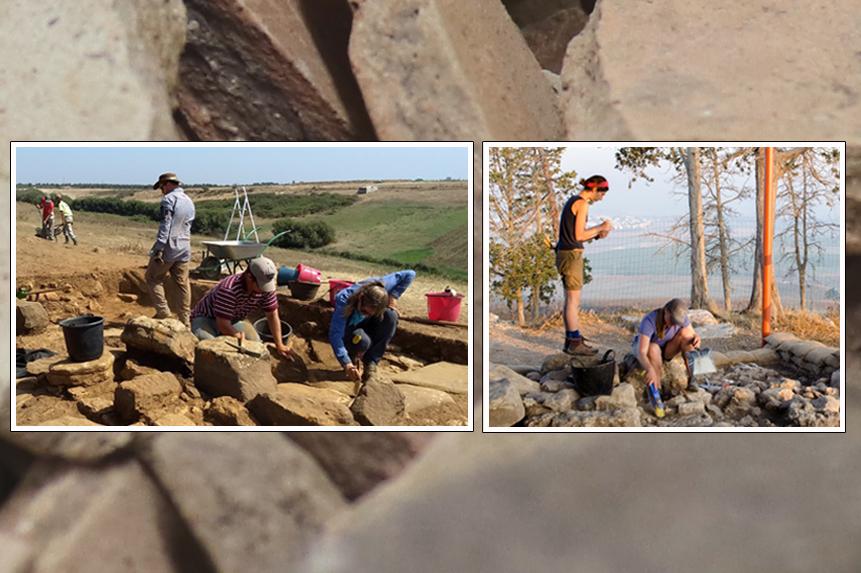
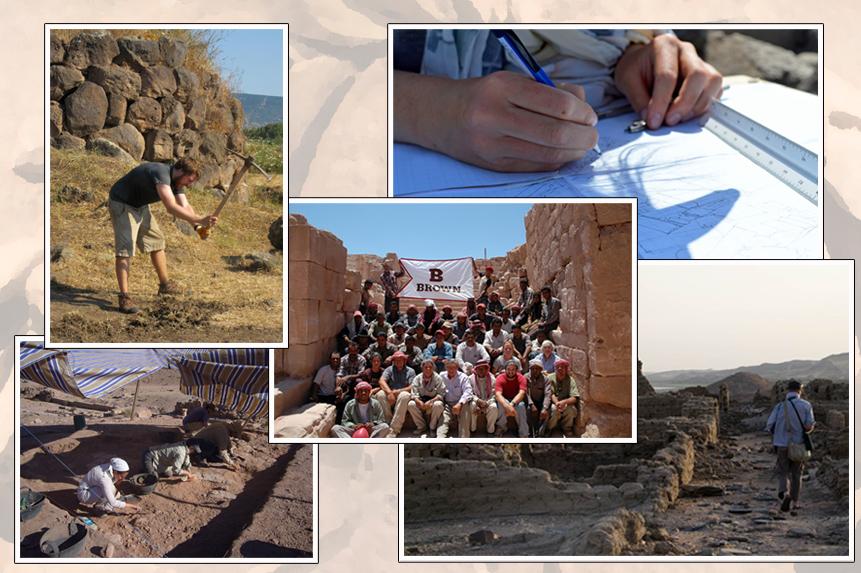
In practice, almost all students invariably spend time in the field, either before or during their graduate career. Fieldwork can, and should, take various forms and ideally exposes graduates to a wide range of methodologies and techniques, including excavation, regional survey, artifact analysis, and the restudy of material from previous projects. Students are particularly encouraged to become involved in projects appropriate to their individual research concerns. Financial support towards summer fieldwork expenses (especially travel) is available from the Graduate School and the Joukowsky Institute.
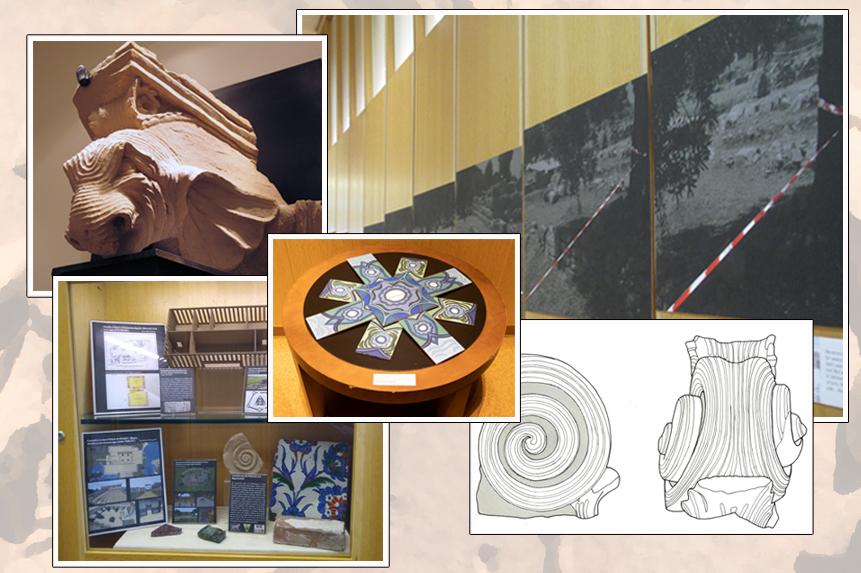
The acquisition of museum or other collections-based experience is a growing dimension in graduate training in archaeology. The Joukowsky Institute houses a small study collection of artifacts (including, pottery, metalwork, and figurines) and a substantial numismatic collection; these are available for student teaching and research. Joukowsky Institute students benefit from the proximity of the Rhode Island School of Design Museum and other regional collections (such as the Boston Museum of Fine Arts and the Metropolitan Museum of Art in New York), together with Brown’s own assets, such as courses and exhibits coordinated through the Haffenreffer Museum and the M.A. in Public Humanities at the John Nicholas Brown Center for the Study of American Civilization.
The Dissertation
After completion of the Preliminary Examinations and the achievement of Candidacy, students must turn to forming their dissertation committee and crafting a dissertation prospectus (an approximately 8-10 page outline, with bibliography). Both these steps should be completed no later than the end of the term following the achievement of candidacy — that is, by the end of the first term of the student’s fourth year (except in extraordinary circumstances and by permission of the DGS). The dissertation committee should have at least four members (including a chair), at least two of whom must be drawn from the affiliated faculty of the Joukowsky Institute for Archaeology and the Ancient World. The Executive Committee will consider both the dissertation prospectus and the committee composition; the dissertation committee will meet in a timely fashion with the student to discuss the prospectus, in company with the DGS.
The official Graduate School rubric on the dissertation requirement reads as follows: ‘The candidate must present a dissertation on a topic related to his or her area of specialization that presents the results of original research and gives evidence of excellent scholarship. The dissertation must be approved by the professor or committee under whose direction it is written and by the Graduate Council. All requirements for the Ph.D. must be completed within five years after advancement to candidacy.’
Students at the dissertation stage will be asked each year, early in the fall term, to submit a brief written update on their progress towards completion, for consideration by the DGS and the Executive Committee. Students are required to submit the thesis to their dissertation committee no later than one month before the planned date of defense. Candidates will deliver a short public presentation of the work, followed immediately by an oral defense conducted by the dissertation committee.
Advising
Within the parameters of these requirements, each student’s progress through the graduate program will be, and should be, quite distinct. Advising on a student’s particular trajectory will be offered by all Joukowsky Institute faculty, and coordinated by the DGS.
Performance Evaluation
In accordance with the requirements of the Brown Graduate School, the DGS evaluates individual student performance each term, in consultation with both Joukowsky Institute faculty and all other faculty with whom the student is currently working. The student is notified in writing of the results of this assessment. In addition, a more formal review is undertaken, by the Joukowsky Institute Executive Committee, after three semesters of full-time enrollment (i.e., in the spring semester of a student’s second year of graduate work). Again, faculty members of the Joukowsky Institute, and all faculty who have taught a student, are asked to comment on the student’s academic performance and capabilities for future success in the field. Student performance in language examinations and in coursework also provides a basis on which the Committee crafts its decision. No student may proceed further on work for the Ph.D. without a favorable evaluation. The Committee's judgment is a collective one.
If the evaluation of the Committee is favorable, then the student is encouraged to continue their progress toward the Ph.D.; if not, the student is advised to discontinue graduate study in the Joukowsky Institute. In all cases, the student is notified of the results of the Committee’s assessment, and a follow-up meeting held with the Director and DGS of the Joukowsky Institute. This meeting will provide additional details of the evaluation, and will offer advice and guidance for the next stages of research and professional preparation.
Former requirements for Ph.D. in Old World Archaeology and Art
A description of the previous Ph.D. requirements is available here.