Skip over navigation
Brown shield Brown shield Brown University Brown shield Brown shield Brown University The Artemis A.W. and Martha Sharp Joukowsky Institute for Archaeology and the Ancient World

Graduate Students

Emanuela Bocancea
Erin Christensen
Sarah Craft
Sarah Dawson
Katherine Harrington

Alex Knodell
Thomas Leppard
Katherine Marino
Lyra Monteiro Claudia Moser

Elizabeth Murphy
Jessica Nowlin
Timothy Sandiford
Bradley Sekedat

Alexander Smith
Carolyn Swan
Jason Urbanus
Cecelia Weiss

Emanuela Bocancea
Status: First Year
Emanuela received a B.A. (Honours) in Classical Studies from the University of Alberta in 2007, and completed an M.A. in Classical Archaeology in 2009 at the same institution.  In her M.A. thesis she analyzed Mithraic art within a modified structural framework, focusing specifically on the Mithraic meal scene, an analysis which involved a critical assessment of structural theory in light of recent trends in continental philosophy.  Emanuela has had the opportunity to participate in various archaeological projects, including two seasons on a Hellenistic site in Thessaly (Kastro-Kallithea), one season at a Roman site in northern Romania (Porolissum), and one season diving and surveying an underwater Roman harbour in the Balearic Islands  (Santija, on Menorca).   Her research interests primarily include the Roman province of Dacia (part of modern-day Romania), with particular focus on its complex religious (and ethnic) situations before, during, and after Roman rule.  She is also fascinated by the use and abuse of the Daco-Roman past in the creation (and constant re-creation) of modern Romanian identity.  More generally her interests also include archaeological theory, burial and religious practices, cultural interactions, and art in the Roman world.

 
Erin Christensen
Status: ABD
Erin finished her B.A. at the University of California, Berkeley, in 2000 with a double major in Anthropology and Classical Civilizations. Her first excavation, to test the waters, she says, was in Ireland at Mainister Chiarain in 1999. It turned out that archaeology was addictive. Since then Erin has gained extensive excavation experience in the Near East, digging in both Israel (Tel Dor 2000, Gesher 2003 and 2004, and Tel Zahara 2006-9) and Jordan (The Islamic Jarash Project 2005-2008), and swears she’ll never go back to digging where it might rain. Her dissertation focuses on Roman silver picture-plates of the Imperial period, combining anthropological theory, economics, art history, and classical sources, among other things. Like her dissertation, her interests are wide-ranging, including urbanism, emulation and art, cross-cultural exchange, numismatics, Roman Britain, and the Roman Near East.

 
Sarah Craft
Second Year
Sarah graduated from DePauw University with a double B.A. in Latin and Ancient Greek, with a minor in Classical Archaeology (2007). Since 2005, she has surveyed in Antalya and Mersin provinces in Turkey, excavated in Sicily, and spent the past two summers in Çorum province, Turkey, as the GIS specialist for the Avkat Archaeological Project. After finishing her undergraduate degree, she received a critical language scholarship from the State Department and spent a summer learning Turkish in Ankara, Turkey. She went on to spend a year working as an intern for the Collaboratory for GIS and Mediterranean Archaeology (CGMA) at DePauw, researching field survey projects in the Mediterranean and compiling their metadata into the project database. Her current research interests include movement as a place-making process, memory, and the intersection of cognitive science, GIS technology, and archaeology in understanding how ancient peoples experienced their landscapes, with a particular focus on the late Roman and early Byzantine landscapes of Anatolia.

 
Sarah Dawson
Status: ABD
Sarah obtained a double B.A. in Classics and French from the University of Wisconsin–Madison in 2003. Before joining JIAAW, she studied at the Université de Provence Aix-Marseille in Aix-en-Provence, France, specializing in Classics and French Literature. Sarah's fieldwork includes two seasons in Portugal at Tongobriga, an early Roman settlement. She excavated in south-central England at Silchester in 2005, a multi-period Roman settlement. In 2006, she attended the Summer Session of the American School of Classical Studies at Athens. Sarah worked as an assistant trench supervisor in 2007 at Kenchreai, a Greek multi-period burial site near Archaia Corinthos. She is currently preparing her dissertation on the role of numismatics in the creation of social memory in 5th century CE Rome. Other interests include Late Antique Gaul, early Christianity, mortuary studies, paleopathology, and sanitation. Concurrently, Sarah is pursuing an M.A. in Classics at Brown University, with a thesis entitled “Epicurean Thought in Ambrose's Hymns.”

 
Katherine Harrington
Status: First Year
Katherine received a B.A. in Classical Archaeology from Dartmouth College in 2006, and completed the post-baccalaureate program in Classical Languages at the University of California, Davis in 2009. Her senior thesis discussed methods of analysis of Classical and Hellenistic Greek pebble mosaics, from issues of iconography to the creation of a computer program capable of measuring the size and shape of individual pebbles in an image. She has participated in the excavations of the Athenian agora for five seasons. Katherine’s research interests concern the Early Iron Age and Archaic Period in Greece, including the development of writing, early colonization, and the reemergence of representational art. Methodologically, she is interested in quantitative and anthropological approaches to archaeology.

 
Alex Knodell
Status: Third Year
Alex received a B.A. in 2007 from the University of Wisconsin-Madison, where he majored in Classics, Classical Humanities and Anthropology, and in the summer of 2006 was a summer session member at the American School of Classical Studies at Athens. For fieldwork, he has worked on surveys and excavations in Portugal, the United States, and Greece. Alex is broadly interested in Mediterranean landscape archaeology and networks of interaction and exchange, more specifically in the Aegean and its trans-Mediterranean interactions through time, though especially in the Bronze and Early Iron Ages. He is particularly interested in technological change and the inception and development of iron metallurgy in Greece, as well as the landscapes of production, networks, and social changes that accompany it.

 
Thomas Leppard
Status: Third Year
Tom holds an M.A. in Ancient History and Archaeology from the University of St. Andrews and an M.A. (with Distinction) in Aegean Archaeology from the University of Sheffield. His Masters thesis addressed continuity and change in Laconia in the period 1100-900 BCE, with a particular emphasis on examining repeated ritual practice within a defined landscape. He has undertaken excavation in the UK, Greece, and Italy, and has led survey teams in Greece and Italy with Anglo-American, Canadian and Dutch projects. Tom’s main research interests relate to the archaeology of complex societies in the prehistoric Eastern and Central Mediterranean, and in particular the late third, second, and early first millennia in the Aegean and Adriatic. He also maintains interests in the archaeology of complex societies in general, comparative island archaeology and anthropology, and in archaeological method, in particular the applicability (and limitations) of GIS-led approaches. He also has interests relating to the taphonomic processes and associated interpretive issues which affect plowsoil assemblages.

 
Katherine Marino
Status: ABD
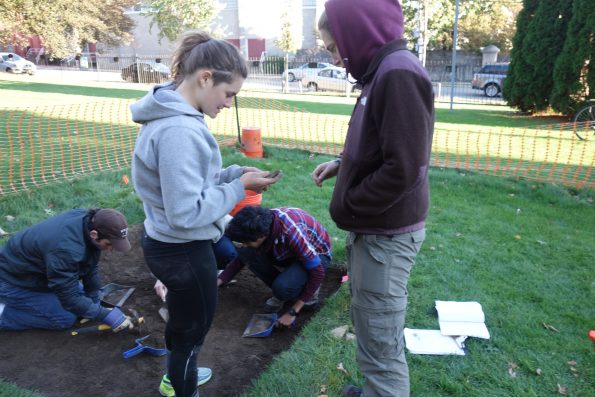
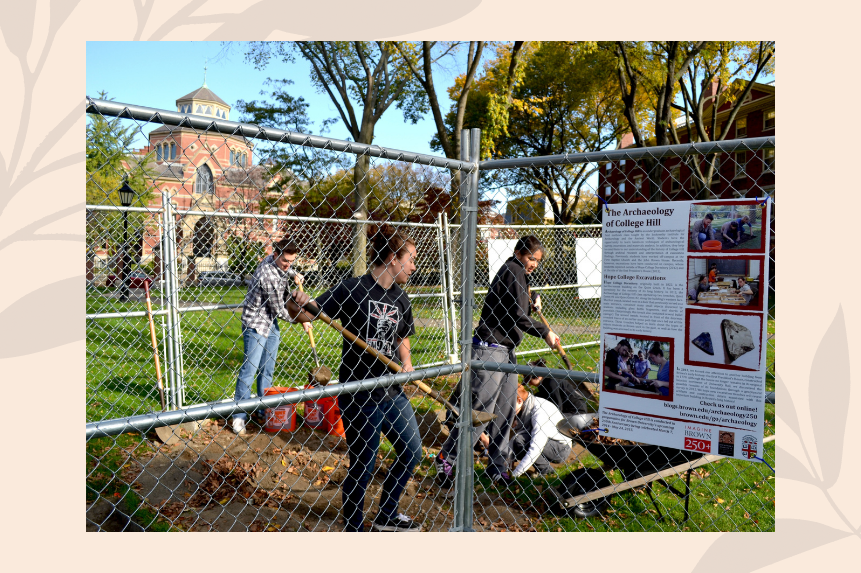
Kate came to the JIAAW in 2004 after graduating from Yale with a B.A. in Classical Civilization. Her senior thesis was concerned with the potential efficacy of contraceptives and abortifacients in the Graeco-Roman World. She currently works at Tongobriga, Portugal where she has dug and done geophysical survey, and where she is helping Jason Urbanus organize a future project. She has done survey work in the Duchessa National Park in Italy, as well as conservation and analysis of Inka textiles in Arequipa, Peru. Her research interests include, among other things, reproduction in the ancient world, myth as science, ancient craft technologies, mortuary studies and archaeological theory. She is currently working on her dissertation which focuses on a corpus of 2nd-3rd century AD medico-magical uterine amulets from the eastern Roman Empire. She is also writing her Masters thesis in Classics at Brown on Terence and Sociobiology. In addition she works at the RISD museum analyzing and cataloguing their Coptic textile collection. From 2006-2008 she held the post of Secretary of the Narragansett Society of the AIA. In 2007-2008 she directed Brown’s field school: The Archaeology of College Hill. You may also recognize her from the cover of the AIA membership brochure.

 
Lyra Monteiro
Status: ABD
Lyra received her B.A. in Anthropology and Classical Civilization from New York University (2000) and M.A.s in Classical Art and Archaeology and in Latin from the University of Michigan (2006). Her many interests in the field include topics of culture change, colonialism/post-colonialism, archaeological theory, archaeological ethics, and ancient literacy. Her fieldwork experience includes excavations at the Roman town of Silchester in England, colonial and prehistoric sites in Virginia and Maryland, and on the Via Sacra in Rome; and the field survey at Metaponto, Italy. She has attended summer workshops in osteology at the Museu Nacional de Arqueologia in Lisbon, and in numismatics at the American Numismatic Society. Additionally, she interned for two years at the Brooklyn Museum of Art, in the department of Egyptian, Classical, and Middle Eastern Art. She is currently enrolled in the Public Humanities M.A. program at the John Nicholas Brown Center, where she plans to explore her interests in the public archaeology of slavery in the United States.

 
Claudia Moser
Status: Third Year
Claudia graduated from the University of Pennsylvania with a B.A. in Classical Archaeology and Classics (2006). After graduation, she worked in the Greek and Roman Department at the Metropolitan Museum of Art in New York. She has also spent three years working in the University of Pennsylvania Museum of Archaeology and Anthropology working on the Corinth Computer Project. As a graduate student at Brown, Claudia has worked at the U.S. Epigraphy Project and interned at the Museum of Fine Arts in Boston. She has participated in excavations and post-excavation analysis at Villa Magna in Italy, in San Venanzo, Italy and in Akrotiri, Greece. Her senior thesis, focusing on the phallus as an apotropaic symbol in the images and texts of Roman Italy, investigated the interactions, correspondences and discrepancies between the artistic and verbal representations of the phallus in the first-century A.D. Claudia’s main research interests include Roman sanctuaries and the ritual that is enacted within them, the interaction of native Italian with Greek and Eastern religions, changes in burial practices and funerary customs, and the interplay of classical languages and material objects.

 
Elizabeth Murphy
Status: Second Year
Elizabeth received a B.A. in Anthropology in 2004 from Barrett Honors College, Arizona State University, with an additional concentration in Classical Studies. Her M.A., obtained in 2007 from the Katholieke Universiteit Leuven, Belgium, specialized in Eastern Mediterranean Archaeology from the Hellenistic and Roman periods. Her thesis entitled, “Speaking Volumes about Production: Innovative Approaches for the Study of Roman Table Wares,” attempted to study the question of relative production volume potential of Roman-period table ware production centers. Having acquired years of field work in Cyprus, England, and the American South-West, including a period as a salvage archaeologist, she now works with the Sagalassos Archaeological Research Project (K. U. Leuven) in Turkey. At Sagalassos, she is currently studying ceramic material from the Potters’ Quarter of the ancient city in order to reconstruct production cycles and techniques, and this summer she continued excavations of a coroplast workshop. Her primary interests are in material studies, crafts production, transfer of technologies, ancient economy, and cultural interaction during the Roman period.

 
Jessica Nowlin
Status: Second Year
Jessica received her B.A. from the University of Texas at Austin in 2007 with a double major in Classics and Archaeology and a minor in Anthropology.  Her senior honors thesis, titled "Settlement Patterns in Veii and Arezzo between 400 BC and AD 14", focused on combining archaeological and literary evidence to better understand the cultural interaction between Rome and Etruria as Rome began its expansion.  After one season of excavation in Belize (2004), she has conducted the majority of her fieldwork with the Institute of Classical Archaeology (Univ. of Texas).  This includes two years of excavation in Chersonesos, Ukraine, one year of survey in Metaponto and Croton, Italy, and one year as the GIS specialist for the excavation of a Roman tile factory in Metaponto.  Her primary research interests are currently the evolution of the theory of "Romanization" as it is used on the Italian peninsula as well as in the provinces, landscape archaeology, the use of technology in archaeology, colonization, roads, and limites.

 
Timothy Sandiford
Status: First Year
Timothy graduated from the University of Newcastle-upon-Tyne in 2003 with a B.A. (with Honors) in Archaeology. He then studied for an M.Sc. in Forensic Archaeological Science at the Institute of Archaeology, University College London (2004). Since 2005, he has concentrated on a number of projects based in Egypt and Turkey as a surveyor, cartographer and GIS technician. These projects include the Greater Abydos Mapping Project (2005-2009), the Shunet el-Zebib Conservation Project (2005-2009), the Brown University Abydos Project (2009-present) and the Archaeological Mission to Kilise Tepe, Turkey (2008-present). His research interests cluster around the methodology of cartography, GIS and remote sensing as applied to archeology and the changing nature of land use and perception of space during periods of cultural transformation, especially with regard to Byzantine and early Islamic Egypt. He is also interested in systems of settlement and cultural identity in the peripheral areas of empire. Timothy was a research intern at the Royal College of Surgeons Hunterian Collection (2004) and is a Fellow of the Royal Geographical Society, London.

 
Bradley Sekedat
Status: ABD
Brad earned a B.A. in Latin and a B.A. in Anthropology from Michigan State University in 2004, and an M.Phil. in Classical Archaeology from the University of Oxford, St. Anne’s College, in 2006. His M.Phil. thesis addresses landscape perception and changing settlement patterns in central Italy between the pre-Roman and Roman periods. Brad has worked as an excavator, surveyor, and field walker in the United States, Italy, Greece and Turkey. At Brown, Brad has pursued further his interest in survey methodology and has developed an interest in the nature of "place", reevaluating the relationship between people and the material aspects of sites such as quarries, mines and modified locations in the eastern Mediterranean. He hopes to conduct a comparative study of quarries and mines as diversely constituted places in the Mediterranean region for his dissertation.

 
Alexander Smith
Status: First Year
Alexander graduated from Brandeis University in 2009 with a B.A. in both Classical Archaeology and Anthropology. Since 2007, he has excavated with the Boston University Mediterranean Archaeological Field School on the Balearic island of Menorca, Spain. Along with his fieldwork in Menorca, Alexander has also excavated with the American Institute for Roman Culture at the Villa delle Vignacce site during their 2008 season. He also participated in the Classical Artifact Research Center at Brandeis University as both an intern (2007-2008) and a student supervisor (2008-2009). In his undergraduate thesis, he addressed the impact of political ideology on the immense archaeological excavations in Rome during the Fascist era. His current research interests include the archaeology of Spain, Romanization, and the political and nationalistic implications of archaeological study. Some of Alexander’s other interests include geographic information systems, geoarchaeology and human osteology.

 
Carolyn Swan
Status: ABD
Carrie received her B.A. in Classical Archaeology from Dartmouth College in 2002, her M.Sc. in the Technology and Analysis of Archaeological Materials from University College London in 2004, and her M.A. in Archaeology and Heritage from the University of Leicester in 2005. Her field experience ranges from excavating at Pompeii, to conserving Bronze Age artifacts in Greece, to working on the GIS for the pyramid workers' village at the Giza Plateau. Carrie’s major research interest is archaeological science and how to link materials science research strategies and techniques with archaeological questions and approaches. In chronological and geographical terms, Carrie is interested in the Greek, Roman, Byzantine, and Islamic periods and the Eastern Mediterranean. Carrie’s dissertation will focus on glassmaking technology and industry in the Near East during the 7th-10th centuries, approaching Byzantine and early Islamic material culture under the analytical umbrella of “Late Antiquity” and exploring the technological impact and implications of sociocultural and political change.

 
Jason Urbanus
Status: ABD
Jason earned his B.A. in Classics from Boston College (2000), where he spent time studying archaeology in Italy and worked as a research assistant helping to edit Greek-English translations of ancient works for publication. In 2002 he received his M.A. in Classics from Columbia University, with an emphasis on Latin literature of the early Roman Empire. He entered Brown University in 2003 and has continued to study Latin literature and Roman archaeology. His interests include urbanism in the ancient world, Roman domestic architecture, survey archaeology, GIS, Pompeii, and the Romanization of Iberia, particularly northern Portugal. He is currently working on his dissertation about the transition of the Castro culture of northwest Portugal during the Roman period. He spent four seasons (1998-2002) excavating in Pompeii and has recently spent the last four field seasons (2003-2007) working at the Roman and Iron Age site of Tongobriga, Portugal. He is currently organizing a new project in Tongobriga that will focus on the archaeology of the ancient town and its environs.

 
Cecelia Feldman Weiss
Status: ABD
Cecelia received a double B.A. in Archaeology and Art History from Tufts University (2003). After graduation she moved to Rome where she worked for two years at an American tour company—educating people about the art, history and archaeology of the eternal city and eating her weight in pizza and gelato. She has excavated at Caesarea Maritima (Israel), Ostia Antica (Italy), and Pompeii (Italy), and surveyed the Middle Phrygian architecture at Gordion (Turkey). Since entering the JIAAW in 2005, she has worked on conceptualizing and implementing the exhibit Believing Africa at the Haffenreffer Museum of Anthropology and continues to pursue an additional curriculum in the public humanities. Her main interests include urban development and urban experiences in antiquity, landscapes, Roman religion and performance. It is at the intersection of these topics where she hopes to further explore concepts of place and place-making, and is currently developing a dissertation dealing with these issues in the context of Roman western Asia Minor.